Key Takeaways
- Hardwired outdoor lighting is safer, more reliable, and adds more home value than plug-in or solar alternatives
- Most outdoor lighting projects in Austin require a permit — working without one creates liability issues at resale
- Low-voltage landscape lighting and line-voltage security lighting serve different purposes — a good installation uses both
- Costs in Austin typically run ,500 depending on scope and number of circuits
- All exterior wiring must be rated for outdoor use (THWN or UF cable) and protected with GFCI outlets
Austin homeowners spend more time outdoors than almost anywhere else in the country. With 300 days of sunshine a year, a well-lit backyard, patio, or front entry isn't a luxury — it's an extension of your living space. But outdoor electrical work is also where shortcuts are most common, and where those shortcuts are most likely to bite you.
We've been wiring outdoor spaces around Austin and the Hill Country since 2004. Here's what you actually need to know before starting an outdoor lighting project — from permit requirements to choosing the right system for your property.
Line-Voltage vs. Low-Voltage Lighting: What's the Difference?
This is the first question to sort out, because the two systems serve different purposes and are installed differently.
Low-Voltage Landscape Lighting (12V)
This is what most people think of when they picture landscape lighting — path lights, uplights for trees and shrubs, in-ground spotlights. Low-voltage systems run at 12 volts, which means they're inherently safer to touch and easier to work with. They run off a transformer that plugs into a standard outdoor outlet, and the cable can be buried shallowly (usually 6 inches or more, though deeper is always better in high-traffic areas).
Low-voltage lighting is great for:
- Illuminating walkways, driveways, and garden beds
- Uplighting trees, architectural features, and fences
- Deck and patio accent lighting
- Creating ambiance without harsh brightness
Line-Voltage Lighting (120V)
Line-voltage systems run at standard household current and deliver significantly more light output. This is what you need for:
- Security floodlights and motion-sensor lights
- Garage lighting and carport fixtures
- Covered porch and pergola lighting
- String lights on permanent circuits (no extension cords)
- Outdoor kitchen areas and outdoor living rooms
Line-voltage work requires a licensed electrician in Texas and always involves pulling wire from your panel or an existing outdoor circuit. It's more involved, but it's also more reliable and more powerful.
Most Austin outdoor living spaces need both.
We typically install line-voltage circuits for security lights, porch fixtures, and outlets — then use those outlets to power a low-voltage transformer for landscape accent lighting. You get the best of both systems.
Do You Need a Permit for Outdoor Lighting in Austin?
Yes — in most cases. The City of Austin requires an electrical permit for any new circuit, new outdoor outlet, new hardwired fixture, or subpanel work. Dripping Springs, Bee Cave, Cedar Park, and other surrounding municipalities have similar requirements.
Low-voltage landscape systems connected to an existing outdoor outlet typically don't require a permit on their own. But if you're adding a new outdoor outlet to power that transformer — that's permit territory.
Why this matters at resale.
Unpermitted electrical work shows up on home inspections and can delay or kill a sale. We've fielded calls from homeowners who bought houses with unpermitted outdoor wiring and are now paying to redo work that was done wrong the first time. Do it right the first time.
What Makes a Good Outdoor Electrical Installation
Not all outdoor electrical work is equal. Here's what separates a solid installation from one that'll cause headaches in a few years:
Weatherproof Wiring
All outdoor wiring must be rated for wet or damp locations. In conduit runs, that means THWN-2 wire. For direct-burial runs (underground without conduit), it means UF-B cable. Using standard indoor wire outdoors — even in conduit — is a code violation and a fire hazard. We see this all the time when diagnosing problems with "handyman special" outdoor electrical work.
GFCI Protection
Every outdoor outlet in Texas must be GFCI-protected, and any fixture within 6 feet of water (pool equipment, outdoor sinks, fountain pumps) needs GFCI as well. GFCIs trip when they detect a ground fault — basically, electricity taking a path it shouldn't, often through a person. Outdoors, where moisture is constantly present, this protection is critical.
Proper Burial Depth
Underground cable depth requirements depend on the wiring method. Direct burial cable (UF-B) must be buried at least 12 inches deep in most residential settings. Cable in PVC conduit requires only 6 inches, but we typically go deeper — especially under driveways, where shallow burial gets damaged by vehicle weight and settling over time.
Weatherproof Boxes and Covers
Outdoor junction boxes must be rated for wet locations, and outdoor outlets need "in-use" covers — the bubble covers that protect the outlet even when a plug is inserted. The old flip-up covers only protect an empty outlet, which isn't enough for string lights or a power washer plugged in during rain.
Appropriate Fixture Ratings
Outdoor fixtures carry IP (Ingress Protection) or UL ratings that tell you what they can handle. Fixtures rated for "damp" locations are fine under a covered porch; fixtures rated for "wet" locations are required in exposed areas where rain can hit them directly. Using a damp-rated fixture in an exposed spot voids the warranty and the manufacturer's UL listing.
Outdoor Lighting Costs in Austin
| Project Type | Typical Cost Range |
|---|---|
| Single outdoor outlet (new circuit from panel) | |
| Front porch fixture replacement (existing wiring) | |
| Motion-sensor security lights (2–3 fixtures) | |
| Covered patio/pergola lighting package | ,000 |
| Full outdoor living room electrical (outlets, fans, lighting) | ,500–,500 |
| Low-voltage landscape lighting system (transformer + fixtures) | ,500 |
| Pool area electrical (outlets, underwater lights, equipment circuits) | ,200–,000+ |
Factors that affect cost: distance from the panel to the outdoor area, whether trenching is required, the number of circuits, fixture quality, and permit fees (City of Austin permits typically run for residential outdoor electrical work).
Popular Outdoor Lighting Projects We Install Around Austin
String Light Circuits in South Congress & Travis Heights
The patio string light look is everywhere in South Austin, and for good reason. But the safe way to do it is a dedicated outdoor circuit — not running extension cords through windows. We install weatherproof outlets specifically positioned for string light attachment points, often with a timer or smart switch so the lights come on automatically at dusk.
Landscape Lighting in Tarrytown & West Lake Hills
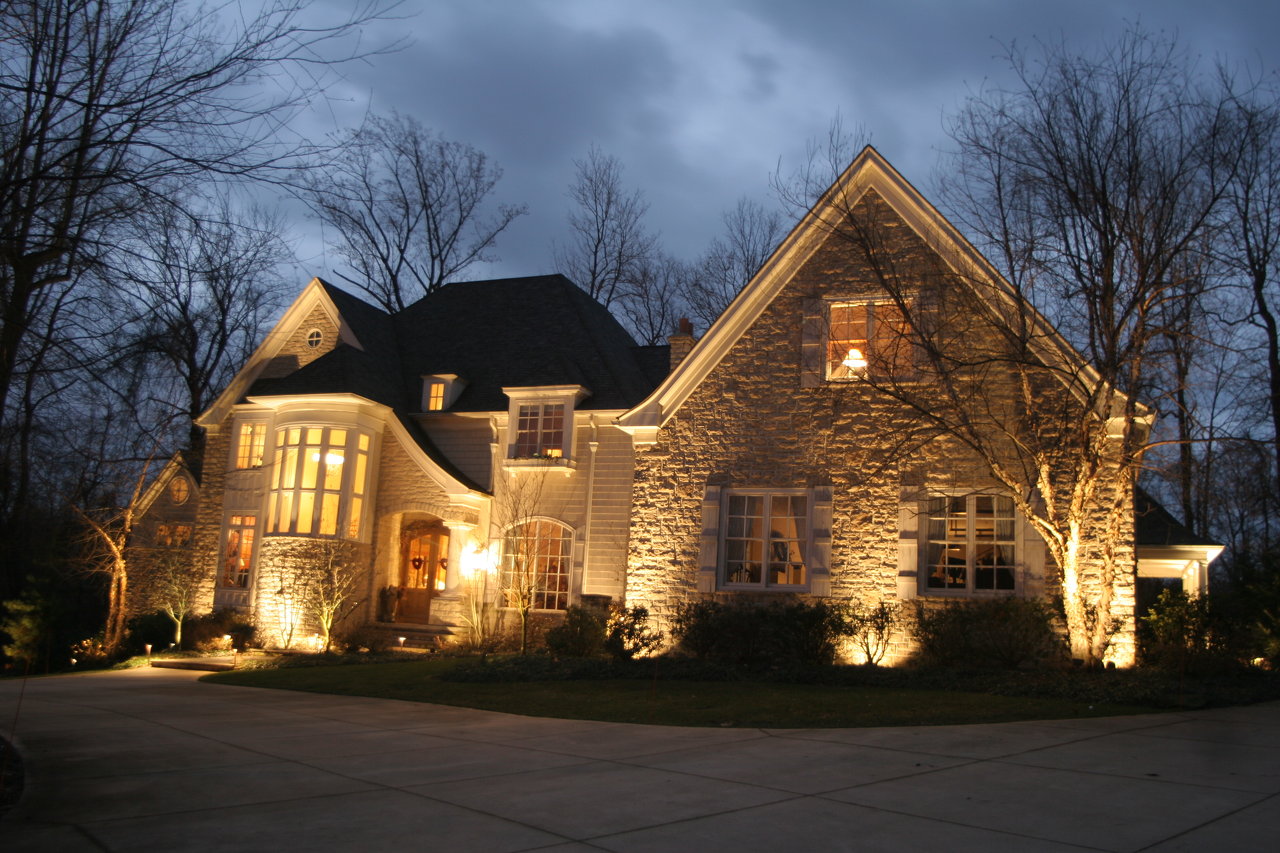
Properties in Tarrytown and Westlake tend to have mature oak trees and significant landscaping that benefits from professional uplighting. A well-designed low-voltage system can dramatically change the curb appeal of a property and showcase architectural or landscape features that disappear after dark without it.
Security Lighting in Cedar Park & Round Rock
Homeowners in the northern suburbs often want motion-activated security lighting — particularly for long driveways, rear garages, and side yards. We install motion-sensor LED floods on dedicated circuits, positioned to cover entry points without blinding neighbors or creating glare that defeats the purpose.
Outdoor Kitchen and Entertainment Areas in Dripping Springs
We install a lot of outdoor entertainment electrical in the Hill Country — Dripping Springs, Bee Cave, Spicewood. These projects typically include dedicated circuits for refrigerators and built-in grills, GFCI outlets every few feet along the countertop, overhead fixture wiring for pergolas or shade sails, and often a subpanel if the outdoor area is more than 50 feet from the main panel.
LED vs. Traditional: Why We Recommend LED for Every Outdoor Project
We spec LED fixtures on every outdoor job we do. The reasons are straightforward:
- Lifespan: A quality LED outdoor fixture lasts 25,000–50,000 hours. A traditional incandescent bulb lasts 1,000–2,000. For fixtures mounted 12 feet up on a soffit, that matters a lot.
- Heat: Incandescent and halogen bulbs run hot, which is a real concern in enclosed outdoor fixture housings during Austin summers. LEDs run cool.
- Energy: Outdoor lighting that runs 6–8 hours a night adds up. LEDs use 75–80% less electricity for the same light output.
- Color quality: Modern LEDs offer excellent color rendering and a range of color temperatures. We typically recommend 2700K–3000K for warm, inviting outdoor spaces and 4000K for security/task lighting.
When Solar or Plug-In Lighting Makes Sense (and When It Doesn't)
We're not opposed to solar path lights or plug-in decorative lighting — they have their place. Solar path lights along a rarely-used side path are fine. String lights plugged in for a party are fine.
Where they fall short:
- Reliability: Solar lights are inconsistent — dim after cloudy weeks, dead in winter when days are short, prone to failure after a few Austin summers.
- Brightness: Solar and cheap plug-in fixtures produce a fraction of the light output of hardwired LED systems.
- Appearance: Most solar path lights look exactly like what they are — afterthoughts. A professional hardwired landscape lighting system integrates with your home's architecture.
- Extension cords: Running extension cords outdoors long-term is a fire and tripping hazard. If you've been doing it for years, it's time for a proper outdoor outlet.
Ready to Light Up Your Outdoor Space?
We serve Austin, Dripping Springs, Bee Cave, Cedar Park, Round Rock, and throughout Central Texas. TECL #28315 — licensed and insured. Free estimates on outdoor lighting projects.
Frequently Asked Questions
Can I install outdoor lighting myself in Austin?
In Texas, you can do electrical work on your own residence without a license — but you're still required to pull permits and pass inspections for any new circuit, new outlet, or new hardwired fixture. The permit and inspection process exists to make sure the work meets code. Low-voltage landscape lighting (12V systems) connected to an existing outlet generally doesn't require a permit and is something handy homeowners tackle. Line-voltage work is better left to a licensed electrician for safety and liability reasons.
How long does an outdoor lighting installation take?
Most residential outdoor lighting projects take one day. A simple project — two or three motion lights and a couple of new outlets — typically runs 3–5 hours. A full outdoor living room electrical package with multiple circuits, buried runs, and a pergola lighting system might take a full day or parts of two days. Permit approval in Austin typically takes 1–3 business days for standard residential work.
What's the difference between damp-rated and wet-rated fixtures?
Damp-rated fixtures are designed for areas protected from direct rain — covered porches, soffits, inside pergolas with roofs. Wet-rated fixtures can handle direct rain and water exposure — open patios, exposed walls, post tops. Using a damp-rated fixture in a wet location is a code violation and a warranty void. When in doubt, go wet-rated — it's never wrong to over-specify.
How deep does outdoor wiring need to be buried in Texas?
NEC requirements: direct-burial cable (UF-B) must be at least 12 inches deep in residential settings. Conduit-enclosed cable (PVC or metal conduit) requires only 6 inches. Under driveways and concrete: 24 inches for direct burial, 18 inches in conduit. We typically go deeper than the minimum wherever there's any chance of future digging — sprinkler system expansion, landscaping work, etc.
The Bottom Line
Austin's outdoor living season essentially never ends. A well-designed, properly installed outdoor lighting system extends your usable outdoor space, improves home security, and adds genuine curb appeal and resale value. The key is doing it right the first time — with proper wiring, weatherproof fixtures, GFCI protection, and permits pulled when required.
If you're planning an outdoor living project, adding a patio or pergola, or just want motion lights around the back of your house, give us a call. We've been handling outdoor electrical work in Austin and the Hill Country for over 20 years.